Wednesday, 12 February 2020

Experiments

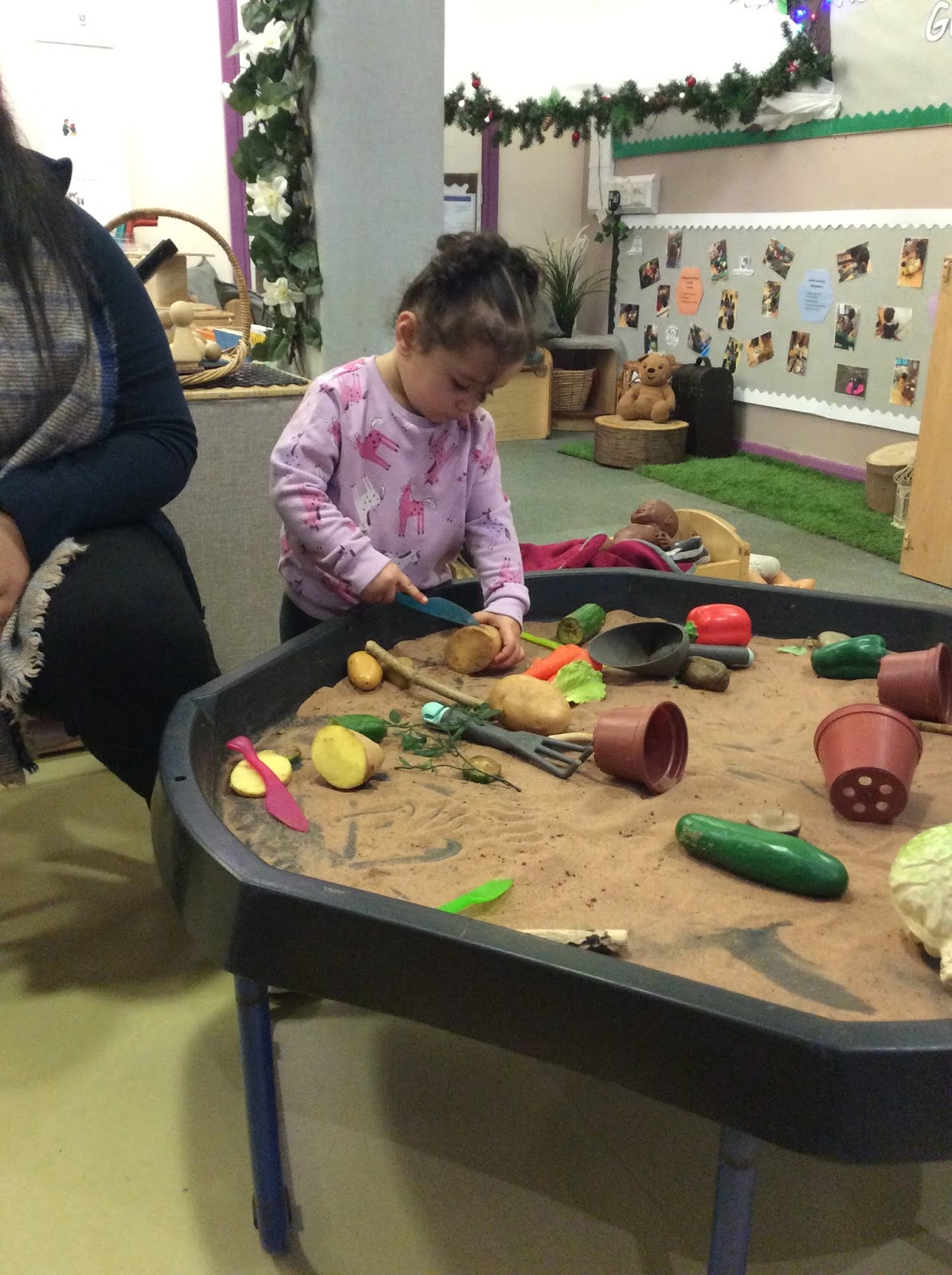
The children have shown a great interest in experimenting with 'dry' and 'wet'
We found flour, powder paints, porridge, sand, water, oil and milk to experiment with.


Staff observed:
Children beginning to be interested in and describe the texture of things.

Being involved and concentrating
•Maintaining focus on their activity for a period of time
•Showing high levels of energy, fascination
•Not easily distracted
•Paying attention to details

Making links
•Making links and noticing patterns in their experience
•Making predictions
•Testing their ideas


Wednesday, 5 February 2020

Corona Virus Information

Advice for parents/guardians

You should not be unduly worried about the possibility of your children catching the Coronavirus.
There is no reason why your children should not continue to attend their early years, school or further education setting as normal.
We recognise that some families or children may be planning to travel to China during the forthcoming half term period. If so, please refer to the FCO’s latest travel advice via the link above.

What action you can take

A UK wide campaign has been launched to provide clear advice on how to slow the spread of Coronavirus.
Please help to support the campaign which promotes basic hygiene practices, such as regularly washing hands and always sneezing into a tissue, to stem the spread of viruses.
You can do this by:
Sharing DHSC content from the following social media links:

Tuesday, 4 February 2020

Safety Message: February 2020

Safer Internet Day 
Tuesday 11th February 2020
Online safety tips for parents of pre-school children: 
- Put yourself in control -Make use of the parental controls available on your home broadband and any internet-enabled devices. You can find out how at your broadband provider’s website or by visiting internetmatters.org.
- Search safely -  Use safe search engines such as swiggle.org.uk or kids-search.com. Safe search settings can also be activated on Google and other search engines as well as YouTube. You can find out more at google.co.uk/ safetycentre.
- Set boundaries -  It’s never too early to start setting rules about when and for how long your child can use devices and start to introduce the subject of internet safety at the same time. Encourage children to use devices in a communal area, keep other devices out of reach and use passwords so they can’t go online without asking you first.
-Explore together - Set your homepage to a child-friendly site such as CBeebies and give them a user account which only allows access to sites and apps you’ve chosen.
- Help them learn through games-  Games are a great way for young children to explore the internet and learn about the world around them. 
Related image

St Mary's Nursery Vision

OUR VISION

HIGH ASPIRATIONS FOR OUR CHILDREN, STAFF AND PARENTS


We want our children to achieve a good level of development (GLD) despite however many disadvantages they may have, gain positive personal and educational experiences, make friends, adopt healthy lifestyle choices, be confident, gain a love of books, music, art and craft. Continue to persist in challenging situation, make good choices, become valuable citizens in our society.


Image result for loose parts quotes

Dummies stop me talking ......

The use of dummies, also called pacifiers or comforters, is a common practice in many countries.

Image result for dummies stop me talking
Advantages
For parents and carers, the most important advantage of the use of dummies is their role in helping babies settle down to sleep or to soothe them. Some studies show that dummies can help establish good sucking patterns in very young babies, especially those born prematurely.
Several research projects have begun looking at a correlation between dummy sucking and Sudden Infant Death Syndrome (SIDS), and whether using a dummy lowers the risk of SIDS. This area of investigation is very new and SIDS support organisations do not recommend the use of dummies as a preventative measure.
 
Disadvantages
There are a few disadvantages associated with the use of dummies. Some of these impact upon the child's speech and language development. The World Health Organisation say that dummy use may encourage the child and mother to stop breast feeding earlier than is in the best interests of the child. Other concerns raised by various professional groups include the increased risk of:
  • Stomach and mouth infections;
  • Middle ear infections (otitis media). This is because sucking opens the eustachian tube, which links the nose and middle ear. This can allow bacteria into the middle ear from the nasal area;
  • Dental problems such as open bite and cross bite;
  • Overdevelopment of the muscles at the front of the mouth compared to those at the back of the mouth. This may lead to a persistent tongue thrust and affect placement of the teeth;
  • Reduced babbling and experimentation with sounds. When a baby or young child has a dummy in their mouth they are less likely to copy sounds adults make or to attempt to babble and play with sounds themselves. This is important in the development of speech skills.
Advice for Parents & Carers
There is a lot of confusing advice available about the use of dummies and it is important to be aware of the range of arguments.
Dummies can be useful in settling young babies and encouraging strong sucking patterns, but their specific usefulness declines after a developmental age of about six months. There is useful advice and tips on reducing dummy use here.

https://ican.org.uk/i-cans-talking-point/parents/do-dummies-affect-speech/


Thursday, 30 January 2020

What a busy week.....

This week Management have attended ABC training. 
The main focus was 'Getting ready to write'

Writing is ‘talk that comes out of a pencil”
If you cannot talk you cannot write.

There are 3 main strands to writing: 
1.Talk 
Children need to hear a new word 40 times in context for it to ‘stick in’ 
Hear it, understand it, rehearse using it.(Listening and Attention - Understanding - Speaking)

2.Physical 
Did you know that standing at an activity is better for children's physical development. Standing/ floor work at an activity develops the upper body muscles, hand eye co-ordination and allows children to cross their mid line. 
We have reviewed the environment to see which areas we can remove chairs. We now promote standing or floor work  in the following areas: 
construction/ small world
creative area
role play (limited chairs)
malleable

3.Pre Phonics
There is no need to try to teach children phonics before they start school. However there is lots that you can do as a parent to help them become ready for phonics when they do start school. In a nutshell: read lots of books, listen to all kind of sounds in the environment, make all kinds of sounds and talk about all kinds of sounds. I will blog more about pre phonics. 


Using a telescope to find 'The Shark in the Park'


Following an interest in Helen's keys and a conversation about the different sizes, Helen gave the children  some different sized keys and they went on a mission to find which key opened which lock.....